The best-kept financial secret in golf: clubs depreciate like cars, but they wear like cast iron. A five-year-old set that cost $1,200 new sells for $300 and performs, for any golfer outside the pro tour, indistinguishably from this season's wall of shine. Buying used golf clubs is how smart beginners and budget-wise veterans build their bags — here's how to do it without inheriting someone's problems.
Why Used Is the Right Call (Especially for Beginners)
- Depreciation is savage and instant. Clubs lose 30–50% of value the moment they leave the shop, and the yearly "revolutionary" upgrades are, by every independent robot test, worth a few yards at best. A 2021 driver vs. a 2026 driver, for a 20-handicap, is a rounding error.
- Your needs will change. A beginner's swing transforms in year one; buying $1,500 of new perfection for a swing you're about to replace is backwards. Buy used, learn, THEN invest in fitting when your swing stabilizes.
- Golf clubs don't wear out at amateur volume. Steel shafts last decades. Titanium driver faces survive tens of thousands of hits. The genuinely consumable parts — grips (\~$8 each to replace) and wedge grooves — are cheap or slow to matter.
The Inspection Checklist (Ten Minutes That Saves You)
In person, check in this order:
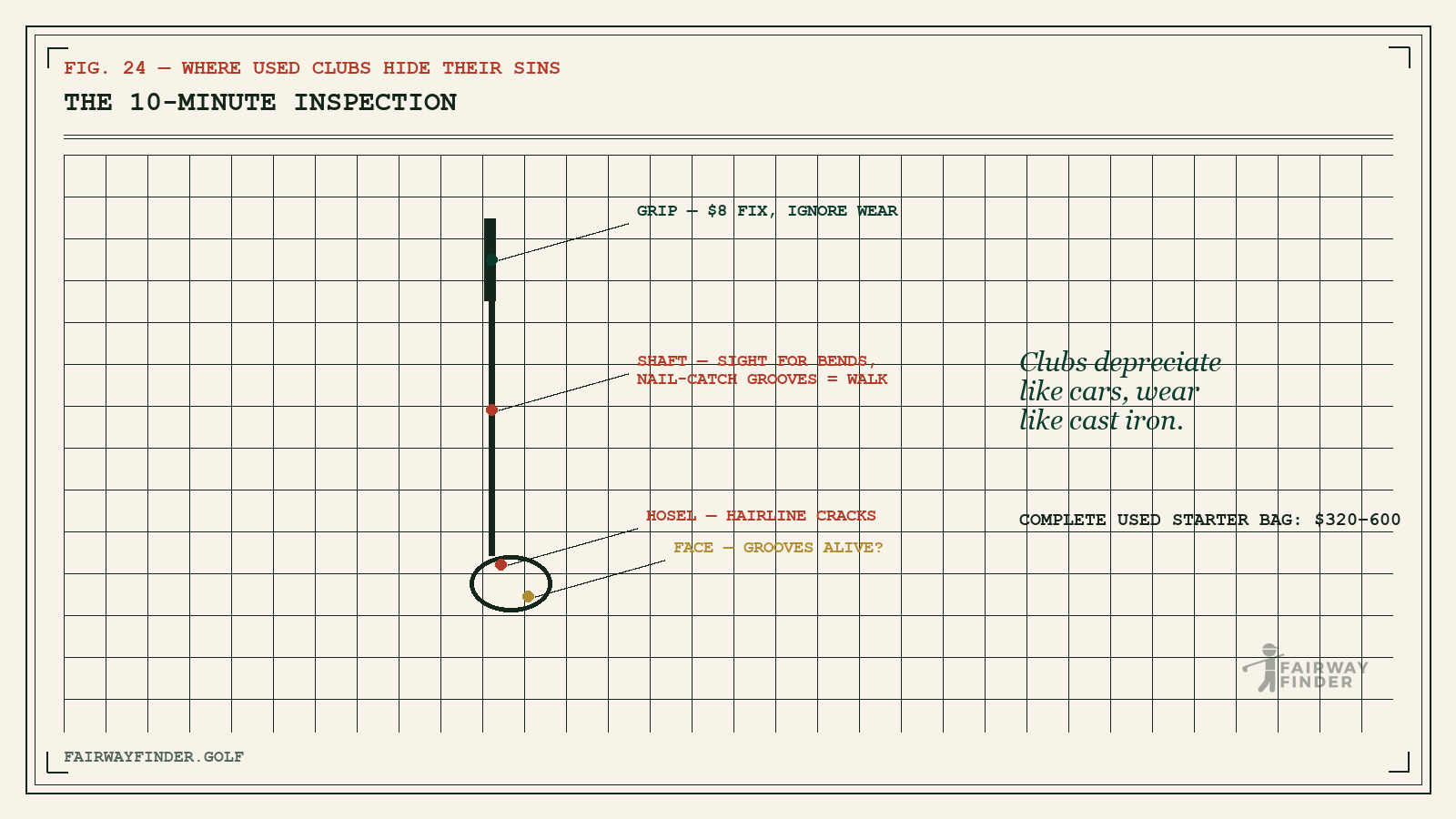
- Shafts first — the expensive part. Sight down each shaft for straightness; any bend or kink is a walk-away. On graphite, run your fingernail along the shaft: cosmetic scuffs are fine, but a groove you can catch a nail in (often from cart rubbing) is a future snap. On steel, surface rust wipes off; pitting doesn't — pass on pitted.
- Faces and grooves. Irons: grooves should be visibly defined, not polished smooth in the center (smooth = thousands of range balls; fine for practice sets, bad for wedges). Drivers: check the face for flatness — a subtle bulge or "caved" spot means a dying face. Rattles inside a driver head are usually loose hot-melt glue (harmless but annoying) — shake and listen.
- Hosels and heads. Look for a hairline crack ring where hosel meets shaft, and for iron heads: a re-shafted club isn't bad, but sloppy epoxy squeeze-out signals amateur work.
- Grips tell you about the owner. Glassy, cracked grips just mean add $8/club to your math. Grips worn through in one thumb spot with everything else mint = a range warrior's set; heavy overall wear = honest course use.
- Match the set to itself. Confirm the irons are actually one set (same model/shaft labels) — mixed "sets" assembled from orphans are common and worth less.
Buying online instead? Stick to platforms with condition grading and returns — the major used-club retailers grade honestly because their business depends on it, and their "good" condition is typically better than the photos suggest. Private-party deals (marketplace apps) run \~30% cheaper but bring the inspection burden back to you; ask for shaft-line and face photos before driving anywhere.
What Old Tech to Avoid (Where "Outdated" Is Real)
Most old gear is fine; a few categories genuinely aged out:
- Pre-460cc titanium-era drivers (small heads, steel driver shafts, anything persimmon): charming museum pieces, brutal to hit. Stay within roughly the last 12–15 years of drivers.
- Blade irons from any era for a beginner — they were unforgiving new and remain so. You want cavity-backs or "game improvement" heads; the used market overflows with them.
- Ancient "wristy" putters and rusted wedges aren't worth the restoration romance for a player set.
- Cracked or "dead" faces on old fairway woods — if a face looks concave, it's done.
What does NOT age: hybrids (a ten-year-old hybrid is still a beginner's best friend), quality putters (a used premium putter is the single best value in golf), and mid-2010s onward game-improvement irons.
What a Smart Used Starter Bag Costs
A complete, genuinely good beginner setup, used: driver ($60–120), hybrid ($30–60), cavity-back iron set 6–PW ($120–200), two wedges ($40–70), putter ($30–80), decent stand bag ($40–80). Total: $320–600 — versus $1,500–2,500 new — and it will not be the thing holding your scores back. Add fresh grips all around ($60 installed) and it feels new where your hands actually touch it.
Half sets are even smarter: a beginner playing driver, hybrid, 7-iron, 9-iron, wedge, putter loses nothing but bag weight.
The One Club Where the Calculus Shifts
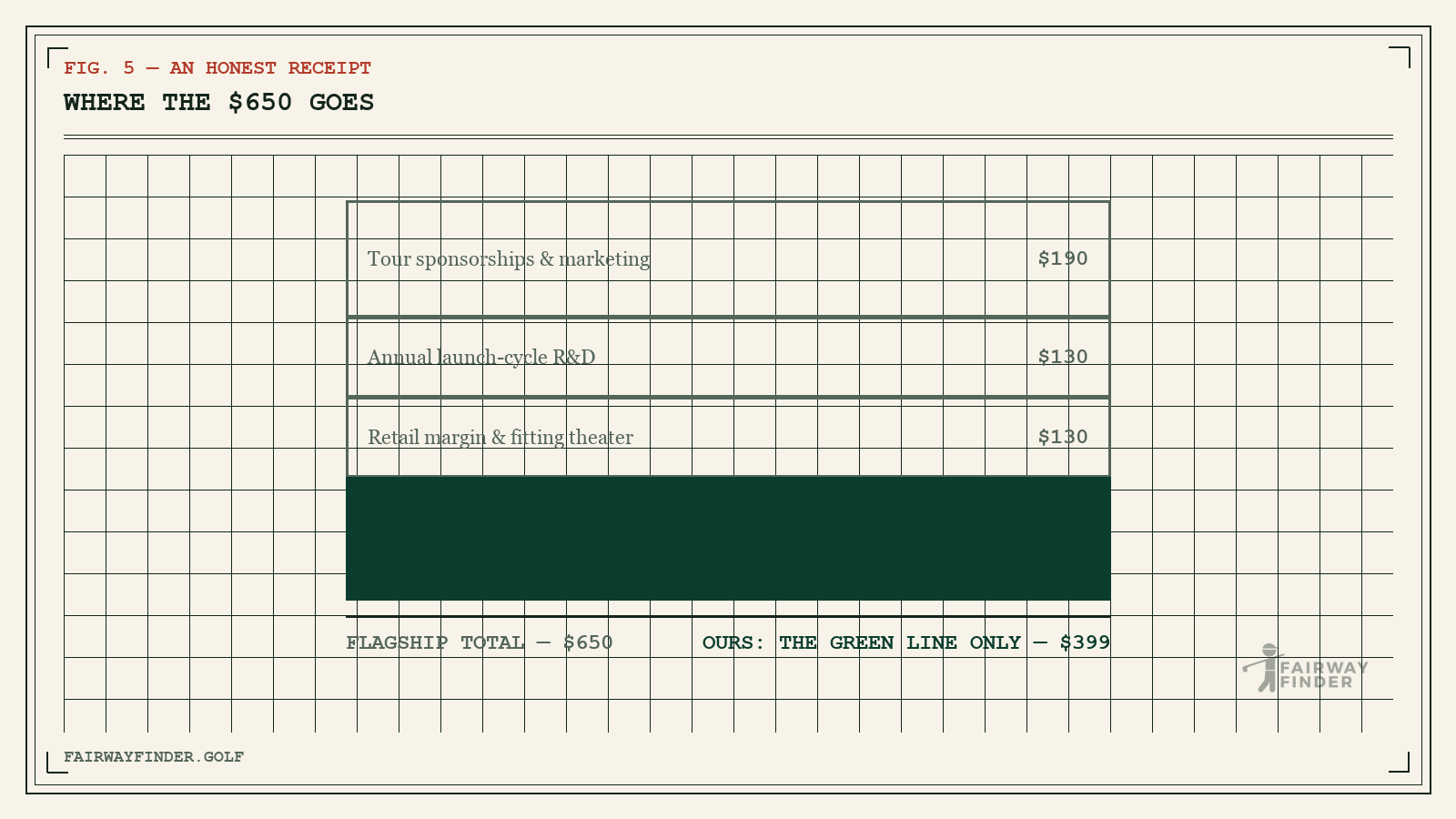
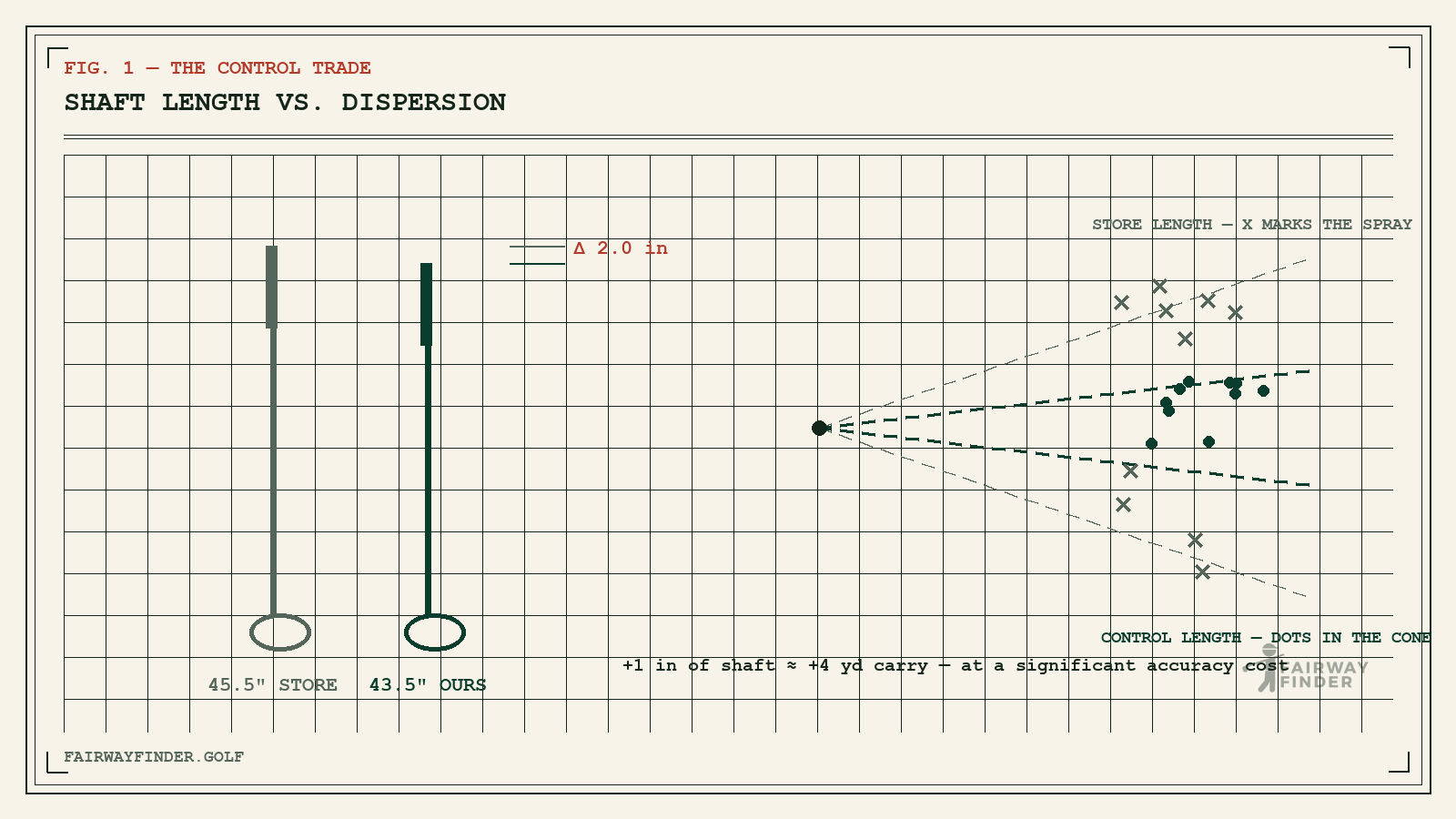
We'll say the quiet part: the used market is thinnest exactly where beginners need the most help — accuracy-first drivers. Used racks are stacked with 45.5-inch, low-loft, stiff-in-name-only sticks that former owners abandoned for a reason. If the tee shot is your problem (it's most golfers' problem), that's the one slot where buying the right thing beats buying the cheap thing — the reasoning is laid out in $399 vs $600+ drivers, and our answer to it is the 43.5-inch Fairway Finder. Build the rest of the bag used, spend the savings where the strokes are.
Buy used, inspect the shafts, skip the museum pieces, re-grip everything. You'll have $1,000 left over for lessons, green fees, and the occasional celebratory 19th-hole round — the parts of golf that actually make you better and happier. For what to put in your bag first, our best driver for beginners guide pairs perfectly with this one.
Ready to find more fairways?
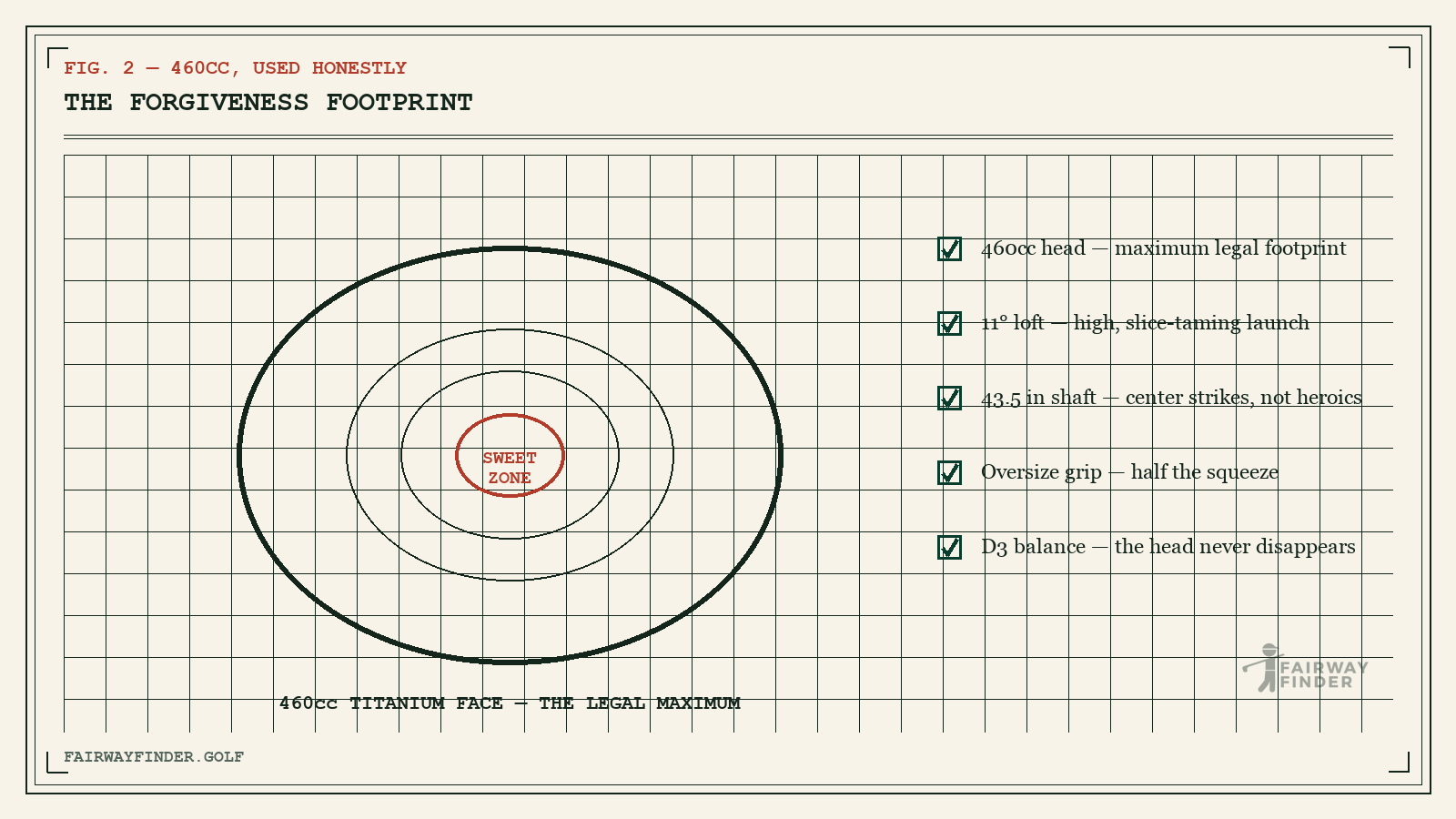
The Fairway Finder driver — 43.5" control length, 460cc titanium, 11° high launch, oversize leather grip. $299 USD / CA$399 with headcover and 1-year warranty.