Walk down any driver aisle and you'll see the same numbers stamped on the sole: 9, 9.5, 10.5. Low loft looks fast. It looks like what the pros play. And for the average golfer, it's quietly one of the most costly mistakes in the bag. If you're hunting for the best driver loft for average swing speed, the honest answer for most players is more loft than you think — and 11 degrees is a better starting point than 9 for almost everyone reading this.
The Best Driver Loft for Average Swing Speed Isn't What the Pros Play
Tour players swing a driver 115 mph and up. At those speeds, the ball generates plenty of lift on its own, and low loft keeps spin down so the ball bores through the wind and runs forever. That's their physics, not yours.
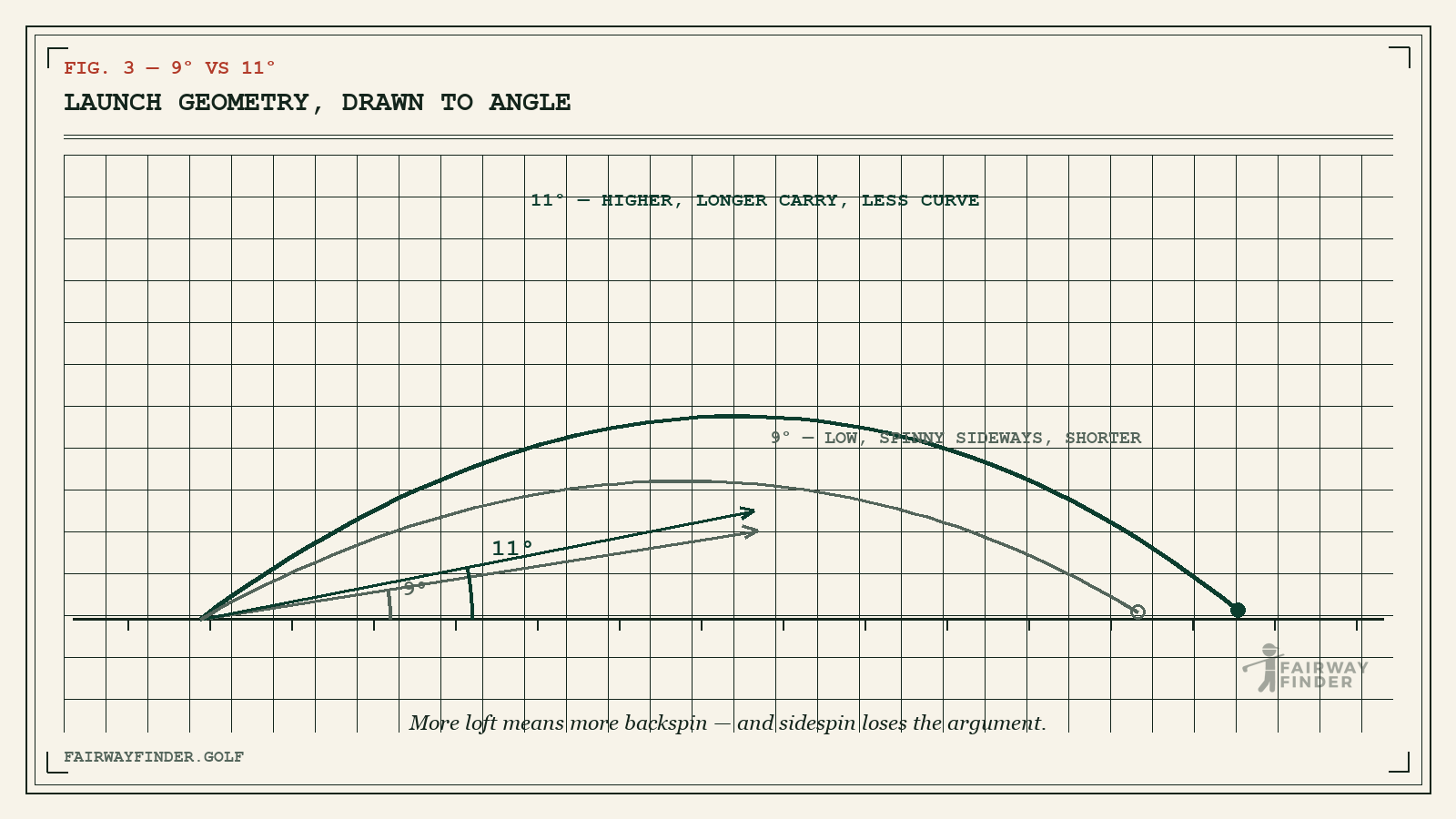
The average male amateur swings a driver somewhere in the 85 to 95 mph range. At that speed, a 9-degree face struggles to get the ball to a healthy launch window. Drives come off low, never stay in the air long enough to carry the trouble, and every yard has to be earned along the ground. The fix isn't swinging harder. It's launching higher.
Higher loft does two things for an average-speed swing:
- It launches the ball on a higher trajectory, which keeps it in the air longer and converts your speed into carry instead of worm-burners.
- It adds backspin, which stabilizes the ball in flight the way feathers stabilize an arrow.
That second point is where the accuracy story starts.
More Loft Means Less Curve
Here's the piece most golfers have never heard, and it's the reason loft belongs in an accuracy conversation at all.
Sidespin — the tilt in the ball's spin axis that turns a drive into a banana — has to compete with backspin. When a lofted face adds backspin, the spin axis tilts less for the same face-to-path mistake. Same swing flaw, straighter-looking flight. It's why your 7-iron rarely slices in a way that leaves the golf course but your 9-degree driver does: the iron's loft is drowning the sidespin in backspin.
Take the same golfer who leaves the face a few degrees open:
- With 9 degrees of loft, the ball launches low with modest backspin, the axis tilts hard, and the slice has all day to curve into the right rough — or worse.
- With 11 degrees, the ball launches higher with more backspin, the tilt is proportionally smaller, and the same mistake flies as a playable fade that stays in the hole.
More loft doesn't fix the open face — nothing in a golf shop fixes an open face. What it does is shrink the penalty for the mistake you were going to make anyway. Over 14 tee shots a round, shrinking penalties is how scores drop.
Why Doesn't Everyone Play 11 Degrees or More?
Ego, mostly. Somewhere along the way, high loft got branded as a beginner's badge, and golfers started buying drivers the way they'd buy a costume. Meanwhile, the actual fitting logic has been drifting the other direction for years: modern buyer's guides for average golfers routinely recommend 10.5 to 13 degrees, and plenty of tour players have quietly moved up half a degree at a time as launch monitors proved the carry gains.
There's one legitimate exception: if you swing well north of 105 mph with a positive angle of attack, low loft can genuinely optimize your flight. If that's you, you already know it, because a fitter told you with a launch monitor — not because a 9 looked right at address.
What This Looks Like in a Real Driver
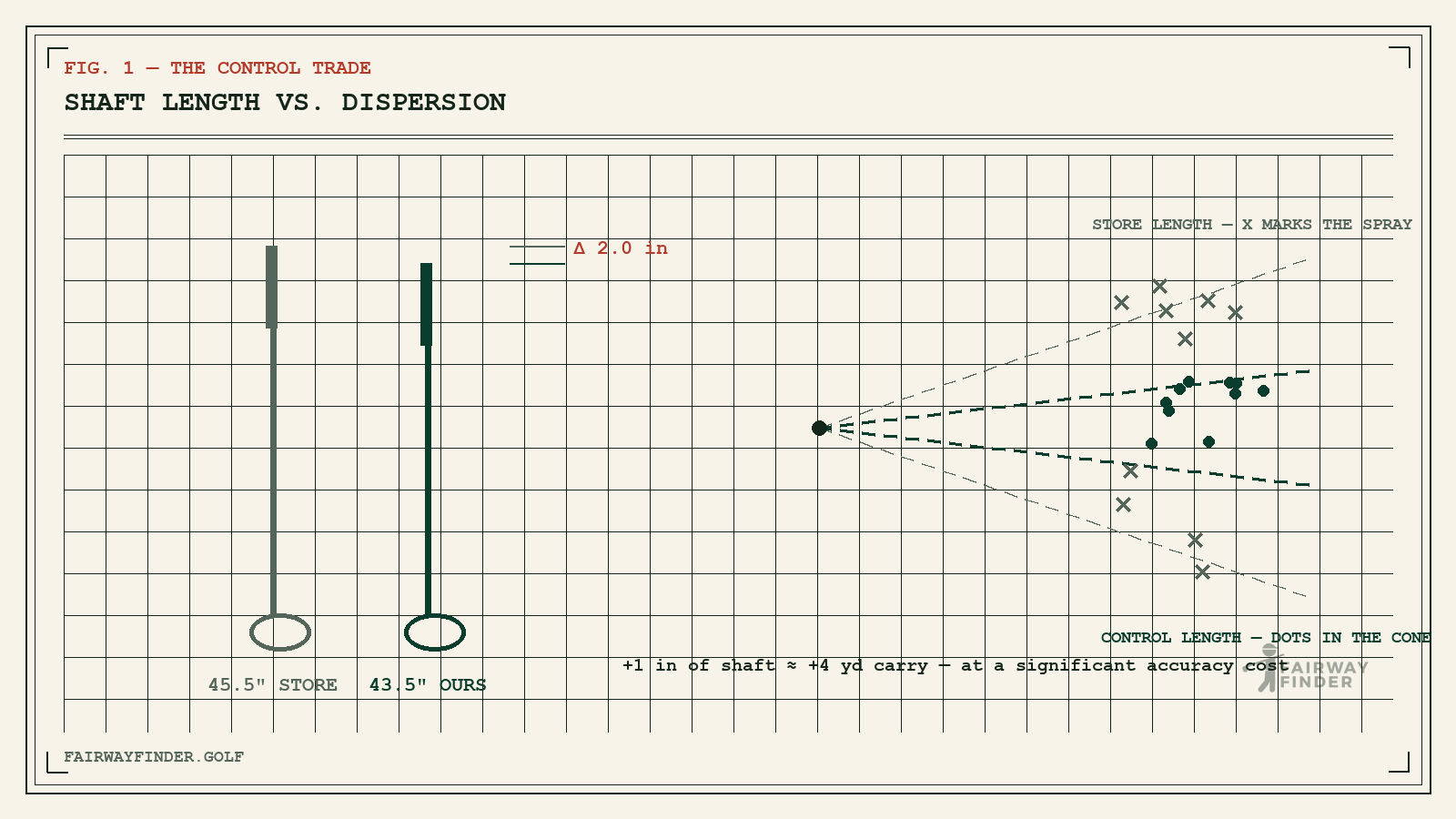
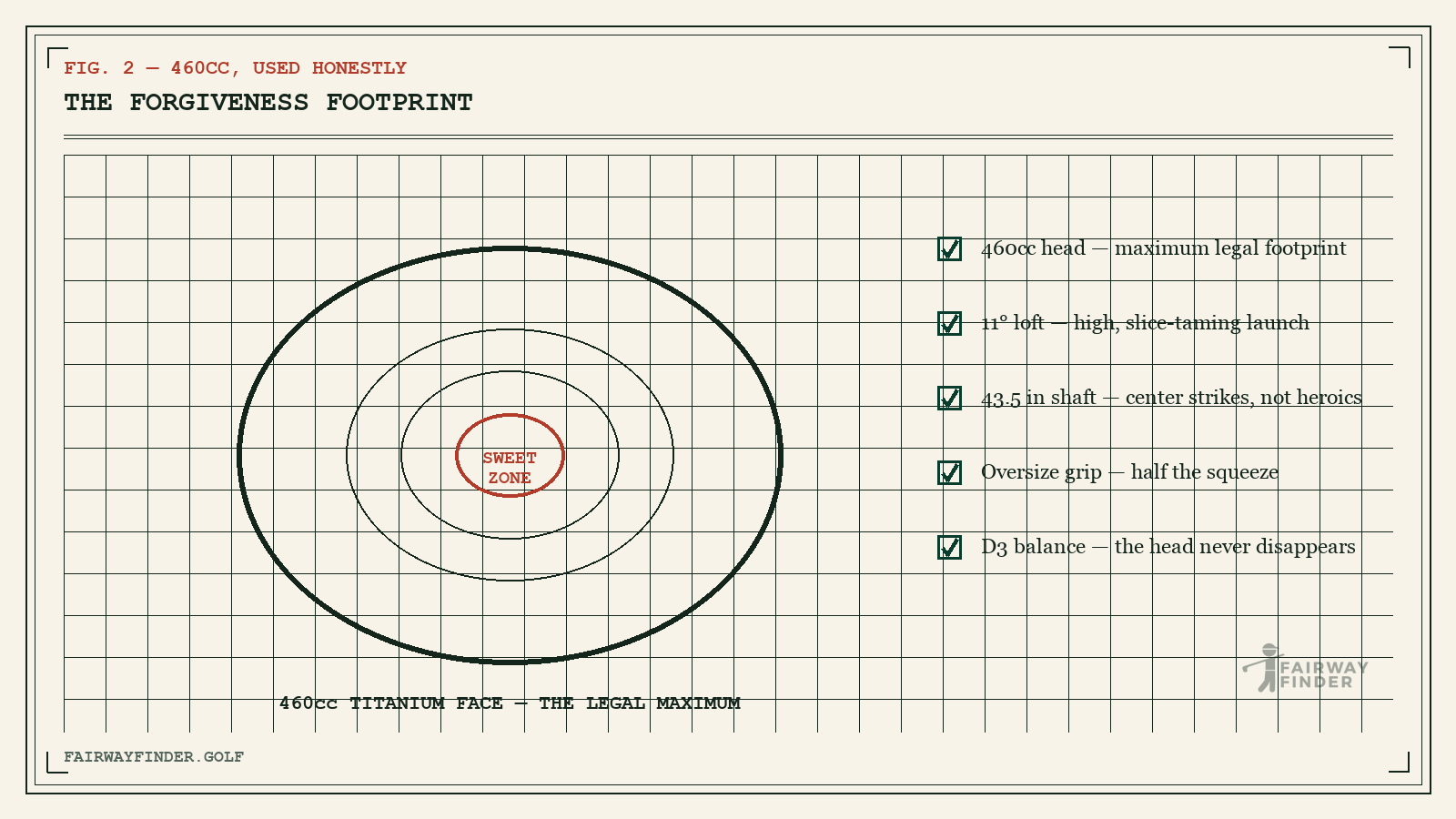
This thinking is exactly why the Fairway Finder driver ships at 11 degrees, full stop — no adjustable hosel to tempt you back down to tour lofts you don't need. Pair that launch-friendly loft with its short 43.5-inch shaft — which earns its accuracy a different way, by making center-face contact easier — and you get a driver where both of the big design choices point at the same goal: keeping the ball in the short grass. If you want the full story on the length side, read our piece on why a shorter driver shaft helps you hit more fairways.
How to Tell Which Loft You Actually Need
You don't need a $400 fitting to get directionally correct here. Be honest about three things:
- Your ball flight. If your good drives peak lower than the trees and your misses curve hard right, you need more loft, not less.
- Your carry vs. roll. If most of your distance comes from bounce and roll, you're leaving carry — and total yardage — on the table with low loft.
- Your miss pattern. The wider your dispersion, the more a high-spin, high-launch setup will pull those misses back toward playable.
A launch monitor session will refine this, but the direction is clear for the vast majority of 85 to 95 mph swings: up in loft, not down.
The Bottom Line
The 9-degree driver is a specialist's tool being sold as a status symbol. For the average swing speed, 11 degrees launches higher, carries farther, and — because backspin fights sidespin — flies meaningfully straighter on your bad swings. Your bad swings are the ones that write your score.
Stop paying for the pro's loft. Buy the one that fits the swing you actually bring to the first tee.
Ready to find more fairways?
The Fairway Finder driver — 43.5" control length, 460cc titanium, 11° high launch, oversize leather grip. $299 USD / CA$399 with headcover and 1-year warranty.