Stroke play — count everything, lowest total wins — is golf's default, and for new golfers it's also golf's cruelest format: one blow-up hole and your day's "ruined" by the math. The open secret of golf's social universe is that most of its fun happens in other formats, most of which are friendlier, faster, and better suited to mixed abilities. Here are the golf formats explained — what they are, how to score them, and which one to suggest for your group.
Scramble: The Party Format
How it works: everyone tees off; the team picks the best ball; everyone plays their next shot from that spot; repeat until holed. One team score per hole.
Why it's beloved: it's the format of charity outings and work events because a beginner contributes without ever hurting the team — your topped drive simply isn't used, and the one 20-foot putt you drain becomes the team's putt. Zero pressure, maximum beer cart compatibility.
Beginner strategy: you're the freeroll. After a good player finds the fairway, you swing free — house money produces shocking drives. And putt FIRST when the team's read is uncertain; your miss shows the line.
Variants: Texas scramble (must use some drives from every player — suddenly your tee shot matters), Florida/step-aside (the player whose shot was used sits out the next), and shamble (scramble off the tee, own ball after — a perfect bridge format).
Best Ball: Team Golf, Own Ball
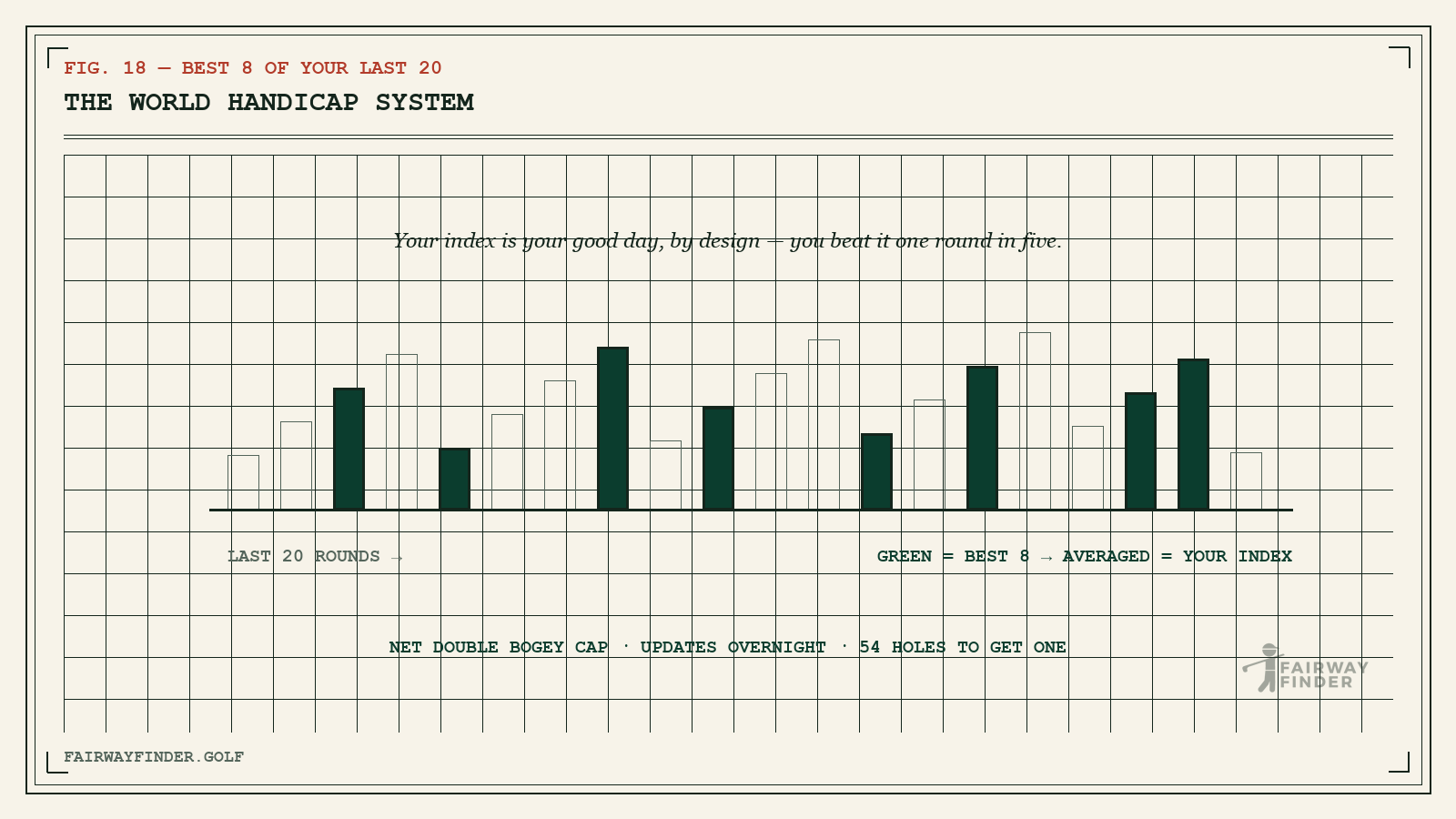
How it works: everyone plays their own ball the whole hole; the team's score is the best individual score. Usually 2-person teams, net (handicaps applied — see how handicaps work).
Why it works: you get the full real-golf experience with a safety net — when your hole implodes, you pick up, your partner carries, no harm done. The standard format of leagues and member events, and the best format for a new golfer's first competition.
Stableford: The Blow-Up-Proof Scorecard
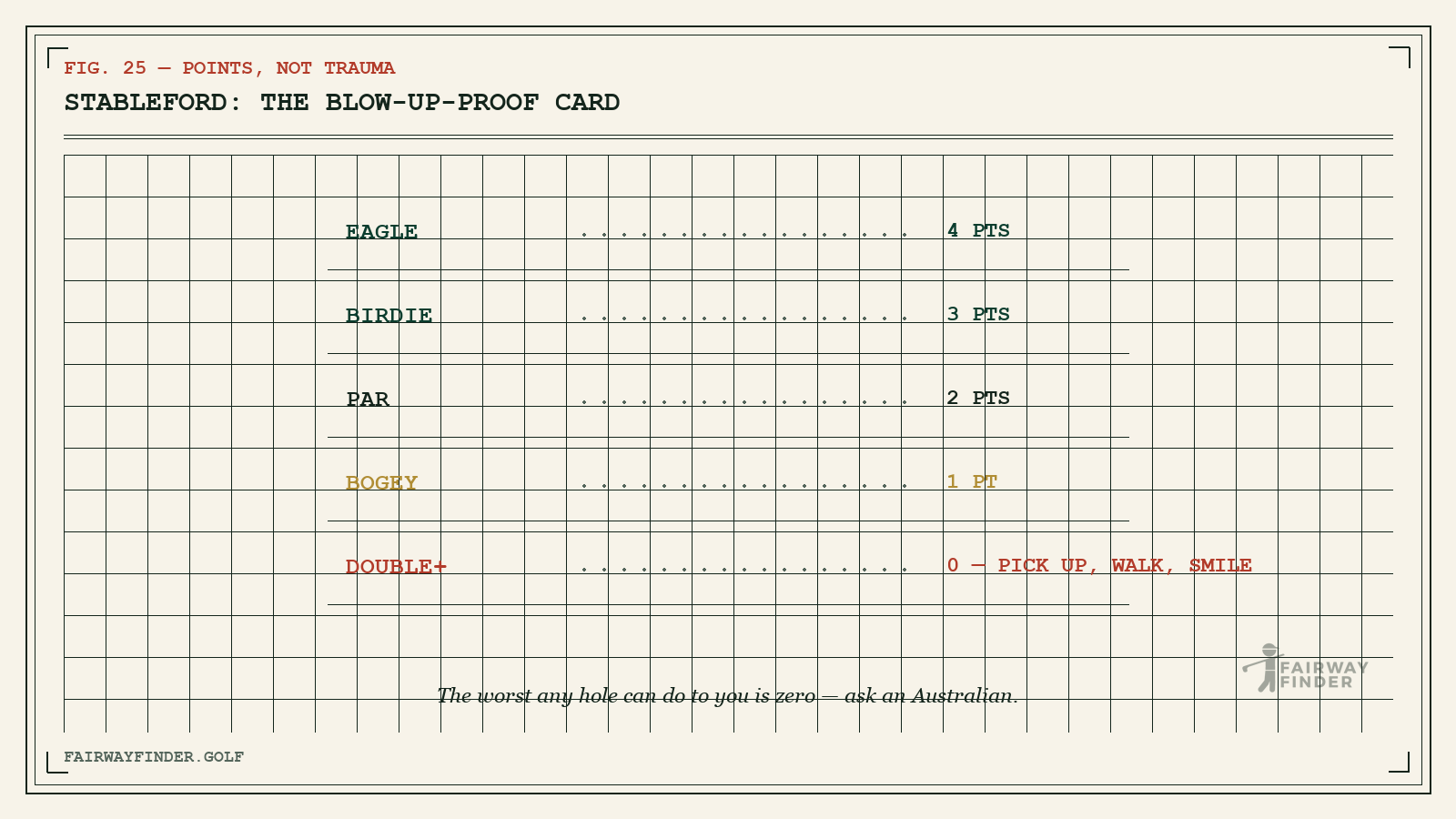
How it works: points per hole instead of strokes: net bogey = 1, net par = 2, birdie = 3, eagle = 4 (common scale; net double bogey or worse = 0). Highest points win.
Why beginners should demand it: the worst any hole can do to you is zero. That quintuple on the 7th? In stroke play it haunts the whole card; in Stableford it's just a hole with no points, forgotten by the next tee. It also has a built-in pace bonus: once you can't score a point, you pick up and walk. Whole countries (ask an Australian) run their club golf on Stableford for exactly these reasons — its obscurity in America is a genuine puzzle and, frankly, an outdated habit.
Match Play: The Original Game
How it works: you versus an opponent, hole by hole. Win the hole with the lower score and go "1 up"; the match ends when someone leads by more holes than remain ("3&2" = 3 up with 2 to play). Total strokes are irrelevant.
Why it's great for beginners: same virtue as Stableford — disasters cost exactly one hole. An 11 loses the hole no worse than a 6 does. It's also golf at its most psychological: conceding putts ("that's good"), pressing when down, the handshake ritual. Every golfer should play match play monthly; it's the format the game was born in (the history's here).
Skins and Nassau: The Money Games
- Skins: every hole is worth a unit ("skin"); win the hole outright to claim it; ties carry the value to the next hole. Carryovers create the format's drama — three tied holes make the 4th worth four skins and suddenly everyone's hands are shaking over a $2 bet.
- Nassau: three bets in one — front nine, back nine, overall (the classic "$2/$2/$2"). The "press" (starting a new side bet when down 2) is where friendships are tested. As a beginner: play net with full handicaps, keep stakes at lunch-money level, and know that agreeing to the bet's terms on the FIRST tee, precisely, is itself sacred etiquette.
Formats That Deserve a Comeback
Filed under underserved classics your group should try:
- Alternate shot (foursomes): partners share one ball, alternating swings. Terrifying, hilarious, fast — 18 holes in under 3 hours — and the ultimate relationship stress test.
- Chapman/Pinehurst: both partners tee off, swap balls for the second shots, pick one, alternate in. All the teamwork, less of the terror.
- Bingo Bango Bongo: three points per hole — first on the green (bingo), closest once all on (bango), first to hole out (bongo). Brilliant for uneven groups because points come from order, not just skill.
- Wolf: rotating captain picks a partner (or goes lone wolf for double stakes) after watching tee shots. The most fun four golfers can have with a scorecard, and criminally under-played.
Picking the Right Format
Corporate outing or first-timer in the group → scramble. New golfer's first real competition → net best ball. Regular foursome tired of stroke play → Stableford month, then Wolf forever. Grudge settling → match play, obviously. And whatever the format: handicaps on, stakes small, terms agreed on the first tee, all disputes settled at the 19th hole. The format is just the container — the game inside is the same one it's always been: hit it, find it, count it honestly, needle your friends. For getting the "find it" part right more often, our guide to hitting more fairways travels well in every format.
Ready to find more fairways?
The Fairway Finder driver — 43.5" control length, 460cc titanium, 11° high launch, oversize leather grip. $299 USD / CA$399 with headcover and 1-year warranty.