About one golfer in twenty plays left-handed, and the golf industry treats them accordingly: half-empty demo racks, "we can order that," and instruction videos that all face the wrong way. It's the most underserved corner of mainstream golf — which is strange, because some of the best players ever (Mickelson, Bubba, Mike Weir) played lefty, and the lefty population includes a twist nobody expects. Here's the left-handed golfer's survival guide, honest gaps included.
First Decision: Are You Actually a Lefty Golfer?
Golf handedness is weirder than writing handedness, and this choice — made in week one, lived with forever — deserves real thought:
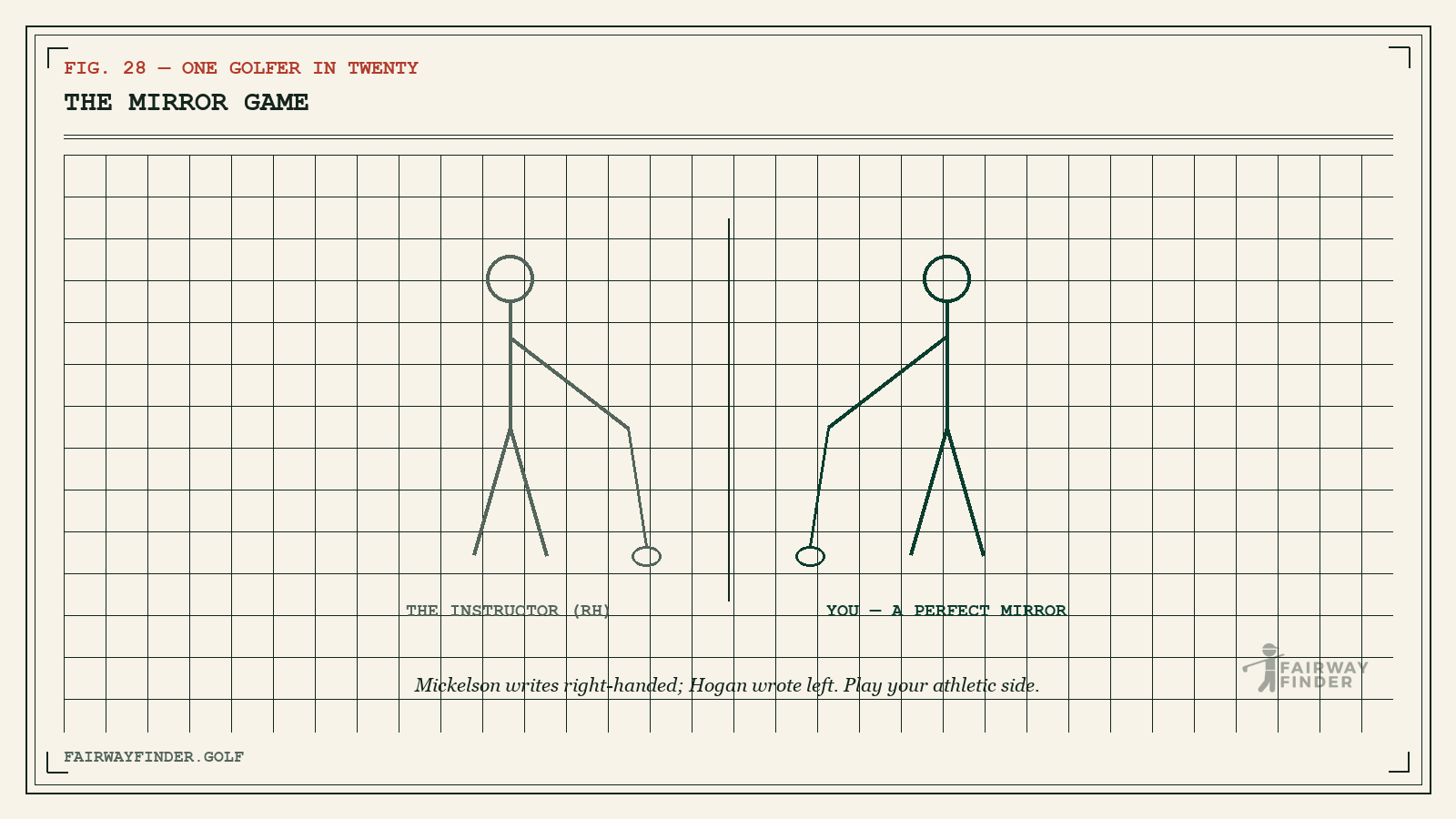
- Phil Mickelson is right-handed. He plays golf lefty because he learned mirroring his father. Ben Hogan was left-handed and played righty. The correlation between writing hand and best golf swing is far looser than assumed.
- The old shop advice — "play righty, son, the equipment's easier to find" — pushed generations of natural lefties into awkward right-handed swings. That advice is outdated: lefty gear, while thinner on racks, is entirely findable online now, and no equipment convenience is worth swinging your weak side for forty years.
- The practical test: swing a club (or a broom) both ways for a week. Which side lets you throw — where the trail arm feels like it's slinging something? Which finishes in balance? Sweep a floor: the hand you naturally put on top matters more than the hand you write with. Play the side with the athletic motion, full stop.
- Cross-dominance bonus: many coaches note that lefty-playing golfers with a dominant right eye (aiming eye closer to the target line... the mirror of righty convention) enjoy real aim advantages. If you're mixed-dominance, golf may be the sport where it finally pays.
The Equipment Reality (and How to Beat It)
The honest state of lefty gear:
- New clubs: every major manufacturer makes left-handed versions of nearly everything — but not every model, loft, or flex, and shops stock a fraction of it. Rule of thumb: mainstream game-improvement lines have full lefty runs; niche models and some specialty lofts don't. Order online or through the shop; the catalog is bigger than the rack.
- Used clubs: the real squeeze. Lefty used inventory runs thin (5% of players = 5% of trade-ins), so the used-club bargain strategy requires patience, saved searches, and pouncing. Flip side: lefty used prices often run lower per quality because the buyer pool is small too — the patient lefty eats well.
- Demo days and fittings: call ahead. "Do you have lefty heads in the fitting cart?" is a five-second question that saves a wasted Saturday. Good fitters will order lefty demo heads if asked — being 1-in-20 means being easy to remember, and lefty golfers get famous at their local shop fast.
- Full transparency from us: our own Fairway Finder driver currently ships right-handed only — the small-brand economics of lefty tooling are the industry's whole problem in miniature, and we'd rather say that plainly than pretend otherwise. Lefties deserve the same accuracy-first thinking; the design principles in our beginner driver guide (length you can control, loft, forgiveness) apply identically when shopping lefty options from the big catalogs.
Learning Lefty in a Righty World
The instruction gap is real — and it comes with a secret weapon:
- The mirror trick: a left-handed golfer watching a right-handed instructor face-on sees... a perfect mirror of their own swing. Many coaches consider teaching lefties EASIER for exactly this reason: stand facing your student and your demonstration is their template. If a coach seems thrown by your handedness, find one who isn't; plenty of great teachers love lefty students.
- Video content: rather than hunting scarce lefty-specific videos, learn to mentally mirror standard content — "swing left" means your right, etc. Clunky for a week, automatic within a month. (Some video apps can flip/mirror footage — genuinely useful for comparing your swing to a righty model.)
- Course strategy quirk: most courses were designed with righty misses in mind — out-of-bounds tends to guard the righty slice side. Your miss patterns interact differently with the architecture: sometimes the trouble ignores you entirely, sometimes a hole feels weirdly booby-trapped. Learning YOUR lines (see aiming and tee strategy) matters double when the designer wasn't thinking of you.
The Lefty Advantages (Yes, They Exist)
- Matchups and money games: in scrambles and best-ball, a lefty pairs beautifully with righties — different miss sides mean someone's always in play, and doglegs that terrify your partners feed your shape.
- The caddie-view putt: you read greens from the opposite side by default; lefty-righty pairs make devastating green-reading teams.
- Scarcity itself: lefty clubs get less shop-worn, lefty golfers get remembered by pros and fitters, and there's a genuine fraternity — lefties spot each other across ranges like owners of the same rare car.
The survival guide summary: choose your side by athletics, not stationery; buy patiently online and used-when-possible; weaponize the mirror in lessons; learn the course lines built for the other 95%. The game itself is perfectly symmetric — par doesn't check your dexterity, and the handicap system has no lefty column. Swing your side, and welcome to the club within the club.
Ready to find more fairways?
The Fairway Finder driver — 43.5" control length, 460cc titanium, 11° high launch, oversize leather grip. $299 USD / CA$399 with headcover and 1-year warranty.